Less deadhead mileage.
Predictable, resilient supply chains.
Freight operators face surging fuel expenses, volatile shipping schedules, customs paperwork backlogs, and empty return miles. Waypoint engineers sovereign logistics AI systems that connect enterprise TMS, telematics feeds, and warehouse docks—optimizing multi-modal routes in real time while keeping human dispatchers in command.
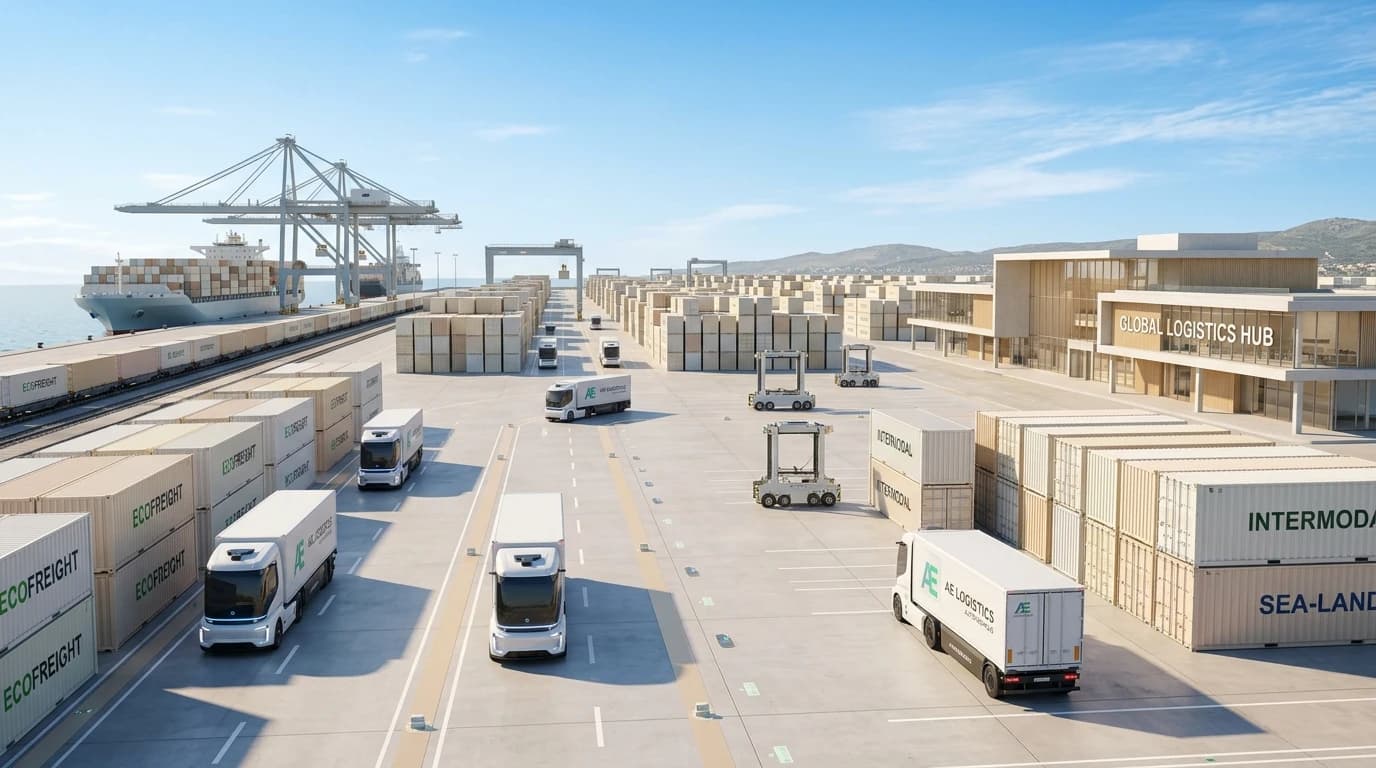
Continuous dynamic multi-variable routing recalculating traffic and elevation profiles.
Bills of lading, invoices, and customs documents pre-cleared straight-through in seconds.
Predictive ETAs and multimodal transfer coordination across active long-haul corridors.
Real-time CAN-bus vibration and brake diagnostics predict mechanical failure weeks ahead.
Origin Depot to Destination Dock: AI Across the Freight Pipeline
Follow an active multi-modal freight consignment across 5 operational transportation stages. Inspect how AI intervenes beneficially at each step to eliminate deadhead, pre-clear customs, recalculate routes, and prevent roadside failures.
Scans enterprise TMS orders, calculates 3D pallet volumetric footprint, pairs load with nearest available fleet unit to eliminate empty deadhead miles.
Manual broker phone calls taking 3 to 4 hours while empty trucks return across state lines burning unbillable diesel.
Autonomous algorithm pairs empty return trailers with pre-verified shipper loads within 45 seconds.
Six Purpose-Built Supply Chain AI Disciplines
Logistics operators require deterministic, high-throughput AI built to interface directly with existing transportation management systems. Select an area below to view verified field benchmarks:
Real-Time Dynamic Route Optimization
Dispatchers recalculate routes manually when traffic, border congestion, extreme weather, or port delays hit—costing millions in wasted fuel, missed delivery appointments, and driver overtime.
Continuous multi-variable optimization evaluates active road, rail, and sea legs every 90 seconds, recalculating multi-stop itineraries dynamically to skirt bottlenecks and minimize idle dwell.
Meet the Autonomous Freight Staff
Autonomous AI workers embedded into your TMS, routing engines, telematics streams, and customs EDI brokers under human dispatcher supervision:
RouteMaster-AI
Ingests active transport management system (TMS) manifests, evaluates road restrictions, weather patterns, and fuel pricing to autonomously re-route long-haul fleets in real time.
DocuFreight
Extracts line items, consignor/consignee data, and HS commodity codes from multi-page PDFs and bill of lading scans, filing customs declarations straight-through without manual data entry.
Sentinel-Fleet
Monitors continuous CAN-bus telemetry, oil viscosity indicators, and brake sensor feeds across entire carrier fleets, scheduling shop maintenance before roadside failures occur.
LoadMatch Pro
Continuously scans spot boards, contract tenders, and internal fleet coordinates to match empty return trailers with high-yield freight, slashing unprofitable deadhead miles.
DockFlow
Coordinates incoming trailer geofence arrivals, dynamically assigning available dock bays and dispatching warehouse cross-dock teams to eliminate carrier detention penalties.
ColdGuard Sentinel
Continuous sub-minute telemetry tracking for temperature-sensitive cargo, detecting micro-excursions and dispatching emergency cooling protocol overrides automatically.
What Changes When AI Connects the Freight Journey
Compare traditional manual handoffs with Waypoint’s real-time autonomous multi-modal AI coordination:
Dispatchers make phone calls and check spreadsheets. Manual bill of lading generation causes 45-minute depot staging delays.
Delay: 3 hours manual matchAI pairs freight with optimal carrier backhauls instantly. Automated e-CMR and volumetric 3D pack plans generated in 30 seconds.
Execution: 45 seconds auto-tenderCustoms clerks re-type paperwork into portal fields. Minor tariff classification errors lead to multi-day container impounds.
Delay: 4 business hoursOptical multimodal models ingest invoices, extract line items with 99.8% precision, and pre-file customs clearance before truck reaches border.
Execution: 12 secondsStatic route plans fail when road closures occur. Shippers rely on sporadic driver phone check-calls for rough ETA estimates.
Delay: Blind transit intervalsContinuous dynamic routing analyzes road, rail, and sea feeds every 90 seconds, pushing automated ETA updates and avoiding severe bottlenecks.
Execution: 90s live recalculationsTrucks wait in long gate queues outside distribution centers, incurring expensive carrier detention fines and driver frustration.
Delay: 90 min average dwellAutomated geofence detection schedules dock doors in advance, synchronizing warehouse AGV teams for immediate offload turnaround.
Execution: 18 min turnaroundPaper delivery receipts mailed or scanned days later. Billing discrepancies between shipper and carrier take 30 to 60 days to resolve.
Delay: 30–45 days payment cycleMobile biometric or digital signature ePOD capture triggers straight-through freight invoice reconciliation and automated carrier remittance.
Execution: Instant automated auditTrackable Fuel Savings. Hard Operational Recovery.
Logistics directors and 3PL executives evaluate our implementations by verified gallons of diesel saved, reduced dock dwell, and increased freight throughput:
Reduction in Fleet Fuel Burn
Continuous multi-variable route reoptimization dynamically skirts heavy congestion and elevation penalties across long-haul lanes.
Faster Document Processing
Straight-through line item extraction and automated HS classification eliminate border crossing delays and manual clerk keying.
On-Time In-Full Delivery (OTIF)
Predictive ETA calculations and intermodal handoff sequencing keep shipments on schedule across road, rail, and sea tiers.
Roadside Fleet Breakdowns
Predictive telematics algorithms detect brake, transmission, and cooling degradation weeks before catastrophic roadside failure.
Projected Carrier Annual Fuel & Operational Savings by Fleet Size
Select your active transportation capacity profile to preview estimated cost savings:
Air-Gapped Telematics. Zero External Rate Exposure.
Carrier rate tariffs, customer volumes, and lane margins are sensitive trade secrets. Waypoint deploys models in dedicated single-tenant enclaves with complete auditability:
Private TMS Connectors
Native bidirectional API bridges for SAP TM, Manhattan Associates, Blue Yonder, and Oracle Transportation without exposed webhooks.
Single-Tenant VPC Enclaves
Models execute inside your isolated cloud environment (AWS, Azure, or private cloud) with zero telemetry leaving your firewall.
Rate Tariff Confidentiality
Your proprietary freight contracts, shipper discounts, and carrier margin profiles are NEVER used to train shared public foundation models.
Dispatcher Oversight Loop
Autonomous engines calculate and recommend. Human dispatchers maintain final override authority over route approvals and load tenders.
From Lane Audit to Fleet-Wide Orchestration
A disciplined 5-stage deployment methodology designed to demonstrate quick fuel savings before scaling across entire carrier networks:
Fleet & Network Data Discovery
We analyze historical telematics, lane profitability, rate tariffs, and TMS exception logs to model highest-ROI freight corridors.
TMS & Telematics Connectors
Connect seamlessly to SAP TM, Manhattan Associates, Blue Yonder, Oracle Transportation, and telematics APIs (Geotab, Samsara).
Dispatcher-in-the-Loop Pilot
Deploy AI route recommendation and load matching engines alongside veteran dispatchers to benchmark fuel savings and lane margins.
Cross-Corridor Fleet Rollout
Expand verified autonomous dispatch, automated freight doc ingestion, and predictive telematics across all regional operating fleets.
Full Global Network Optimization
Scale autonomous multimodal freight orchestration across international carriers, intermodal rail ramps, and partner warehouses.
Frequently asked logistics & fleet optimization questions.
Concrete metrics on dynamic dispatch route compression, automated Bill of Lading (BOL) extraction across 40+ languages, TMS integration, and 72-hour demurrage prediction.
Our multi-objective optimization solvers recalculate fleet dispatches continuously, evaluating live traffic, weather radar, hours-of-service compliance, and fuel consumption to compress delivery miles by up to 22%.
Ready to Reduce Fleet Fuel Burn
and Eliminate Backhaul Deadhead?
Connect with our freight and supply chain solutions architects to review your TMS environment, evaluate lane exception data, and model projected carrier fuel savings.